2026-09-24 · Tom Reyes
Common Septic Tank Problems: Broken Baffles, Cracks, and Pipe Failures
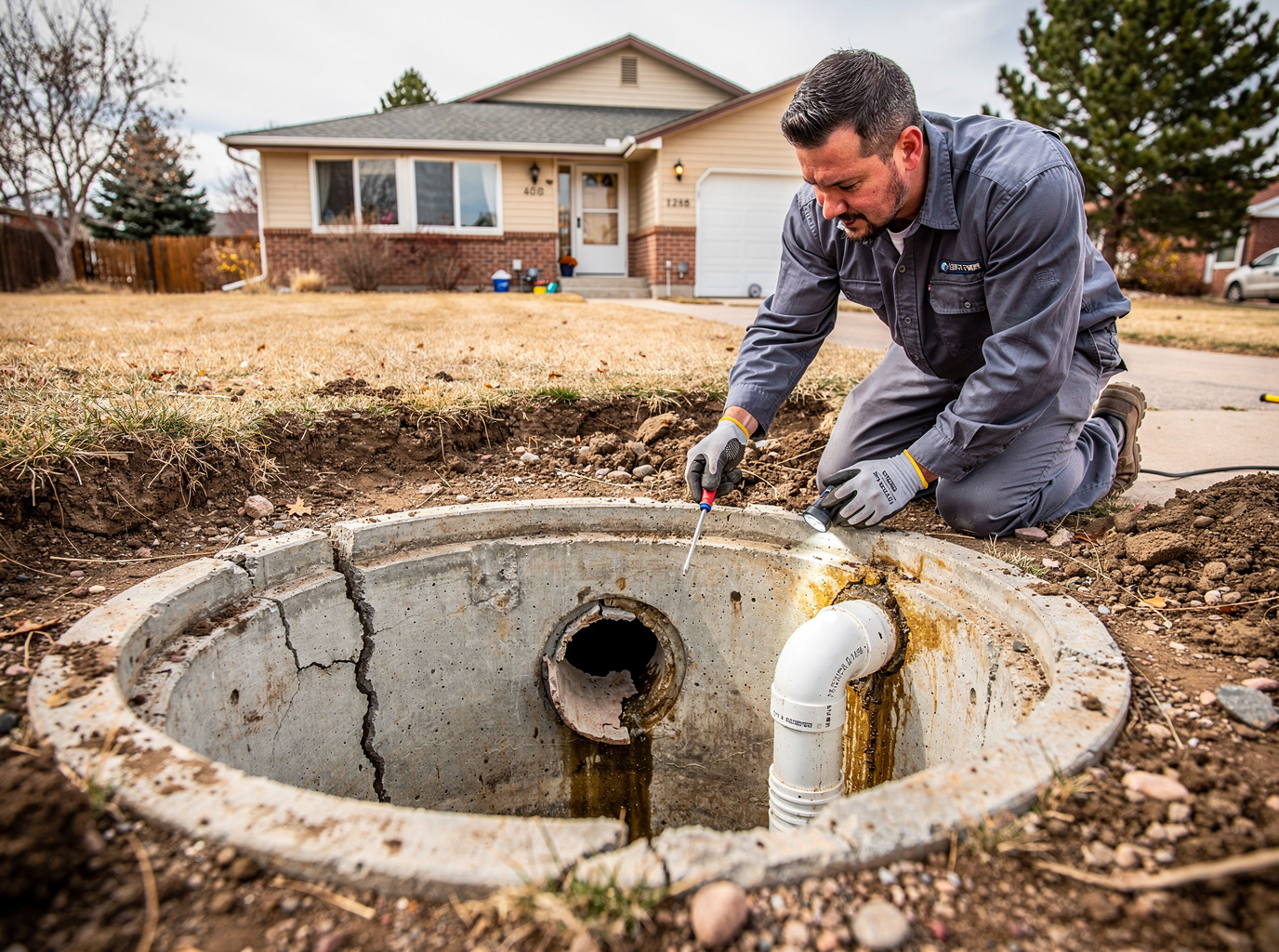
Broken baffles, tank cracks, and pipe failures rank among the top septic tank problems in Littleton homes, often appearing after 15–25 years in concrete tanks common to Arapahoe County properties built before 1990. These issues disrupt flow between compartments or allow solids into the leach field, shortening system life and requiring targeted repairs rather than full replacement in many cases.
Broken Baffles and Their Impact
Baffles direct wastewater flow inside the tank and prevent solids from reaching the outlet pipe. In Littleton’s older stock around Sterne Park and Downtown Littleton, inlet and outlet baffles frequently crack or detach due to hydrogen sulfide corrosion and repeated freeze-thaw cycles during the four distinct seasons. When the outlet baffle fails, solids enter the drain field faster, leading to premature clogging. Technicians often discover this during routine pumping when water levels sit higher than normal or when effluent shows visible solids. Repair usually involves replacing the baffle with a PVC tee or concrete insert sized to the original tank opening. In semi-arid conditions with low humidity, evaporation can concentrate corrosive gases inside the tank, accelerating baffle wear compared to wetter climates. Homeowners in Bowles or Wolhurst notice gurgling drains or slow flushing first, which points to restricted flow past a damaged baffle. Addressing the baffle early prevents solids from overloading the leach field and keeps the system functional without immediate excavation.
Cracks in Septic Tanks
Concrete tanks in Southpark and Columbine neighborhoods develop hairline cracks from soil movement and the region’s low-humidity drying cycles that cause ground contraction. A crack near the lid or mid-wall allows groundwater infiltration during spring snowmelt or heavy summer storms, diluting tank contents and pushing excess water into the leach field. Over time these fissures widen, especially on properties near Littleton Town Hall or the Littleton Museum where older tanks sit in clay-heavy soils that expand and contract. Small cracks may only need epoxy sealing or fiberglass patching once the tank is pumped and cleaned. Larger structural cracks often require tank replacement or sectional repair. Local operators check for cracks by lowering water levels and inspecting walls with lights and mirrors after pumping. In Highlands Ranch and Englewood homes with similar age profiles, crack repairs frequently coincide with riser installation to improve future access.
Pipe Failures Connected to the Tank
Outlet pipes and distribution lines fail when roots from mature landscaping invade joints or when shifting soil around Historic Littleton properties stresses PVC or cast-iron lines. In Arapahoe County’s variable terrain, pipes running from the house to the tank can settle unevenly, creating low spots that collect grease and paper. Failures often surface after heavy winter use when indoor water consumption rises and the system works harder. Camera inspections reveal collapsed sections or separated joints before they back up into the home. Repair may involve pipe bursting or targeted excavation to replace 10–20 feet of line. Properties near Hudson Gardens or Bemis Public Library with established trees see root intrusion more often, requiring annual camera checks to catch issues before they reach the tank itself.
Local Conditions That Accelerate These Problems
Littleton’s semi-arid climate with four seasons and low humidity creates repeated wet-dry and freeze-thaw stress on tanks and pipes. Older homes in Sterne Park and Southpark built on native soils experience more movement than newer developments in Highlands Ranch. During dry summers, soil shrinks and pulls on tank walls; winter freezes then expand moisture in any existing cracks. These cycles shorten baffle and pipe life compared to more stable climates. Pumping every 3–5 years remains the baseline recommendation, with camera inspections added for homes over 20 years old. Linking to Septic Tank Repair helps when cracks or baffles need fixing, while Septic Camera Inspection identifies hidden pipe issues without guesswork.
When to Schedule Inspection or Repair
Watch for slow drains, odors near the tank, or lush grass over the leach field as early indicators. In Littleton, scheduling service between 8am–6pm weekdays or 9am–2pm Saturdays at 5900 S Santa Fe Dr allows same-week response for non-emergency issues. For properties in Bow Mar or TrailMark showing multiple symptoms, combining a camera inspection with pumping reveals whether baffles, cracks, or pipes need attention first. Reading Why You Should Install Septic Tank Risers on Older Colorado Homes explains how better access reduces future excavation costs when these problems arise.